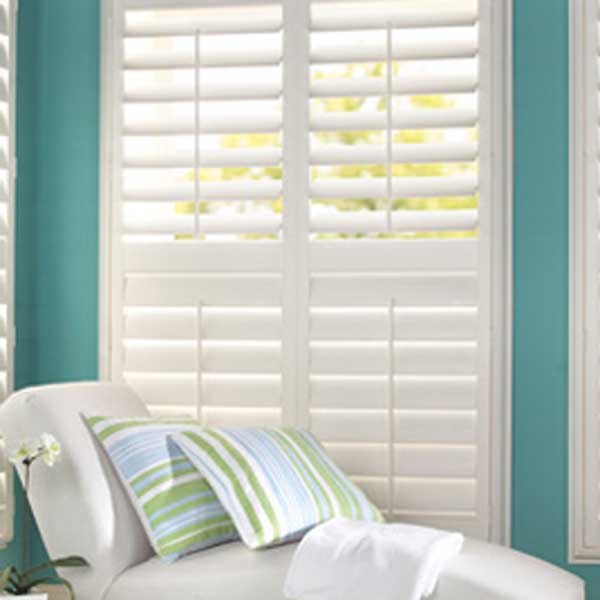
In Southwest Florida, windows are for more than taking in the view. The right windows and shutters can not only add a touch of style to your home, but also help to make it more energy-efficient — a vital feature in Florida’s virtually year-round humidity.
When you have plantation shutters installed in your home, you have many material choices. You’ll want the most suitable products for your region to ensure your investment lasts many  years. So what is the best material for plantation shutters in Florida?
Most homeowners choose between polywood or traditional wood, and both types come with key advantages.
The short answer: wood is our first choice for most rooms because of its natural grain, lighter weight, larger panel sizes and unlimited paint and stain options. Poly is a practical choice for rooms that get wet, such as bathrooms and garages, where its moisture resistance matters most. The comparison further down walks through each factor.
Wood Plantation Shutters
Wood is an industry standard for shutters, and other materials are often compared to it. Many manufacturers use synthetic materials to mimic the appearance of wood, describing them as having a “wood-grain appearance.” However, shutter companies still use many types of wood, such as:
- Cedar
- Alder
- Basswood
The rich look and feel of wood shutters make them ideal for many homes, and many can increase your home’s value compared to other materials. The variations in grain and color also make every shutter unique and set your home apart from others.
Other benefits of wood shutters include:
- Strength
- Durability
- Good insulation
- Stain resistance
To add to your home's individuality, shutters can be painted any color, which means that you can match them to your home's interior trim for a seamless transition from outside to inside your house.
However, wood shutters are more expensive than faux wood materials but aren’t outrageously priced. And like any painted wooden surface, they may need repainting to maintain color. But this won’t need to happen under normal conditions for approximately 15 years.
Poly Plantation Shutters
Polypropylene shutters — or poly for short — are one of the top choices for synthetic shutters in Florida. This moisture-resistant material makes them a suitable choice in areas such as garages or basements.
If you’re looking for something more cost-effective than wood, poly plantation shutters are slightly less expensive. They have a durable, long-lasting finish and maintain their color for the lifetime of the shutter. Poly plantation shutters also aren’t prone to warping when exposed to moisture and humidity.
Keep in mind that poly shutters are heavier than wood, which can put more pressure on the components holding them in place. When it comes to design flexibility, these shutters primarily come in white or off-white. Poly shutters are also non-stainable, and panels are limited in size; the largest poly shutter is smaller than some wood shutters.
Wood vs. Poly Shutters: A Side-by-Side Comparison
If you are weighing wood vs. poly shutters, it helps to compare the two materials one factor at a time.
Look and Finish
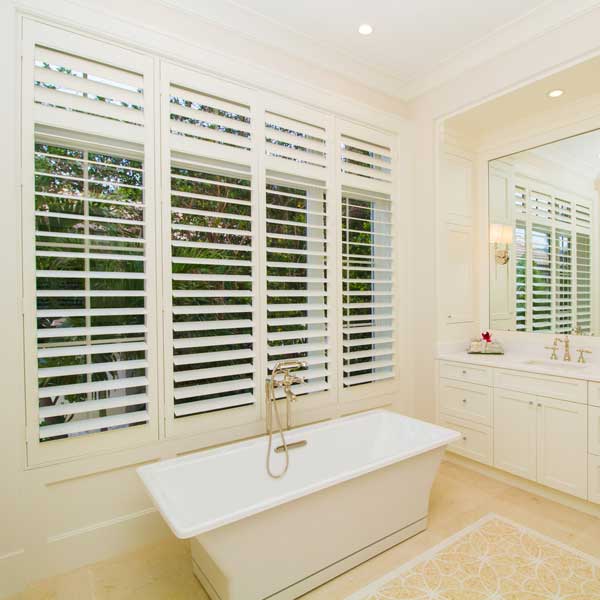
Wood has natural grain, so every panel has its own character. Wood shutters can be painted to match your trim or stained to show the grain, and a stain can coordinate with wood floors, cabinetry or furniture. Poly shutters are made to resemble painted wood. They have a consistent painted look, but they cannot be stained.
Weight and Panel Size
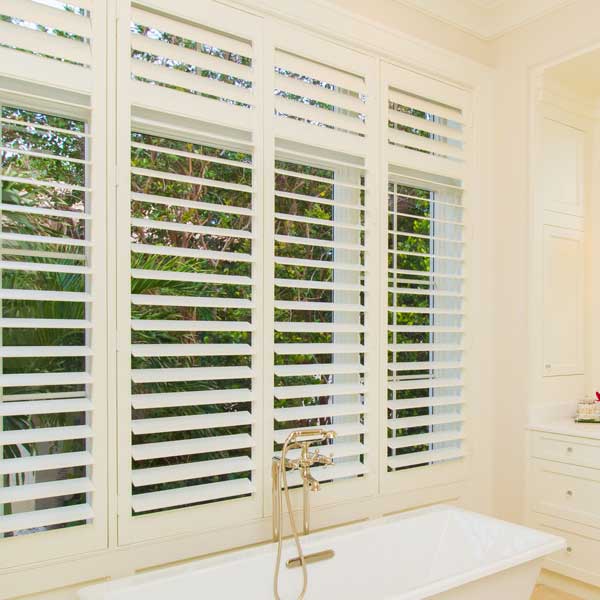
Poly is heavier than wood. The extra weight puts more pressure on the hinges and frame that hold each panel, and it is one reason poly panels are limited in size. Hardwood lets us build wider panels with fewer vertical divisions across a window and a clearer view outside, which matters on large windows and hardwood shutters for sliding glass doors.
Humidity and Moisture
This is where poly earns its place. Poly is a moisture-resistant synthetic, so it does not warp when it gets wet. Wood expands and contracts slightly with changes in temperature and humidity, which is normal; if the louvers loosen or stiffen as a result, adjusting the louver tension brings them back. Spaces that actually get wet are a different matter, because constant moisture can warp wood over time.
Durability and Care
Both materials are durable. Wood shutters are strong and insulate well, and under normal conditions a painted finish lasts many years before it needs refreshing. When it does, wood shutters can be repainted, and a damaged louver can be made and replaced. Poly resists chipping, warping and discoloring and keeps its color for the life of the shutter.
Color Options
Wood shutters can be painted virtually any color or stained, so you can match your interior trim, an accent wall or a favorite piece of furniture. Poly shutters primarily come in white or off-white. If you want white shutters, either material works. If you want a custom paint color or a stained finish, choose wood.
Which Rooms Suit Wood and Which Suit Poly
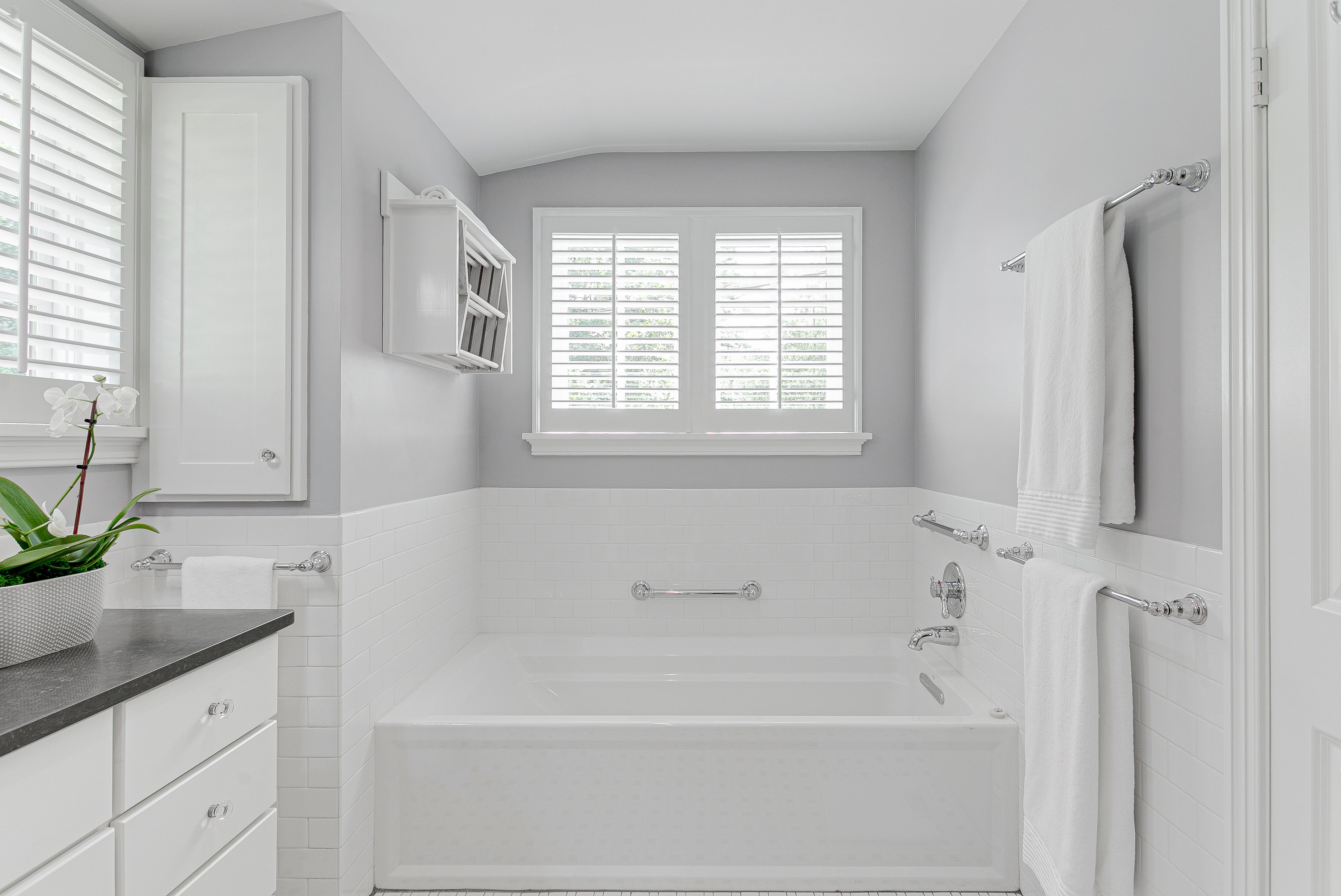
For living rooms, bedrooms, dining rooms, offices and dens, wood is our first recommendation. These rooms show off the grain, finish and wide panels that hardwood allows. Poly makes sense in the areas that get wet, such as bathrooms where shutters sit close to a shower and garages. Many homeowners use wood throughout the house and poly only where moisture calls for it, which keeps the same plantation shutter look from room to room. Our poly shutter product spotlight and our guide to which plantation shutter material each room needs go into more detail.
Hardwood Plantation Shutters Made in Naples
Naples Shutter has been family-owned since 1981, and we build our custom hardwood plantation shutters in our own factory at 1025 Power Street in Naples. We use Poplar and Basswood, reinforce each frame joint with three dowels and finish the shutters in our own paint shop. Our hardwood plantation shutters are covered by a lifetime warranty against defects in material or workmanship for as long as you own your home. During a free in-home consultation, we look at each room with you and help you decide where wood works and where a moisture-resistant option makes more sense.
Wood vs. Poly Shutters: Frequently Asked Questions
Which is better in Florida, wood or poly plantation shutters?
For most rooms in a Southwest Florida home, wood is the better choice: it is lighter, can be built into wider panels and can be painted any color or stained. Poly is the better choice for spaces that get wet, such as bathrooms near a shower and garages, because it resists moisture and won’t warp.
Do wood plantation shutters warp in Florida humidity?
Wood expands and contracts slightly with temperature and humidity, which is normal. If the louvers loosen or stiffen, a quick louver tension adjustment usually brings them back. Wood is not meant for spaces that get wet, though, and constant moisture can warp it over time. Those are the spaces where poly fits.
What colors do poly shutters come in?
Poly shutters primarily come in white or off-white, and they cannot be stained. If you want a custom paint color or a stained finish, wood is the material to choose.
What Is the Best Material for Plantation Shutters in Florida?
Which material is best for your home’s plantation shutters in Florida ultimately depends on your needs, preferences, and budget. Wood plantation shutters offer a natural beauty few materials can compare to, but poly shutters still provide a stunning addition to your home.
At Naples Shutter, we have vast experience working with these materials and can help you better understand the benefits and disadvantages of each. Contact us to speak to one of our experts and find the right plantation shutters for your home today.